Rat control in Apeldoorn: how to recognise rats
Around Dutch homes it is almost always the brown rat: a hefty animal with a blunt snout, small ears and a tail slightly shorter than its body. Rats are wary and mainly active at dusk and at night, so you usually notice the signs first:
- droppings of one to two centimetres, often in clusters along a regular route
- burrows and holes under paving, against the foundations or beneath a shed
- worn paths in the lawn and greasy smear marks along walls
- gnaw marks on wooden doors, drainpipes and cables
- scratching or scurrying under the floor or in the cavity wall
Where do rats come from?
A rat needs water, food and shelter, and the sewer often provides all three. Through a broken or dislodged drainpipe, an old connection that is no longer in use or a damaged inspection chamber, rats end up under the floor or in the crawl space. In the garden they are drawn by bird food on the ground, an open compost heap, a chicken run with scattered feed or rubbish next to the bin.
Part of rat control is working out which route they use. If the signs point to the sewer, we recommend a camera inspection by a drainage specialist and a rat flap or non-return valve (rattenklep), which lets water through but keeps rats out. Rats in a park, on a verge or along the street can be reported to the gemeente Apeldoorn.
Why you should not leave rats be
Rats can carry pathogens, including the bacterium that causes Weil's disease. It spreads through urine, and therefore through anything a rat walks over: garden furniture, the sandpit, the shed floor. Rats also gnaw at pipes, insulation and wooden frames, and burrow under paving so that slabs subside.
As long as there is food, a rat population grows quickly. Waiting a few weeks makes the problem bigger and the job more involved. It is better to call at the first burrows or droppings than once you see rats about in broad daylight.
How we work towards a rat-free home
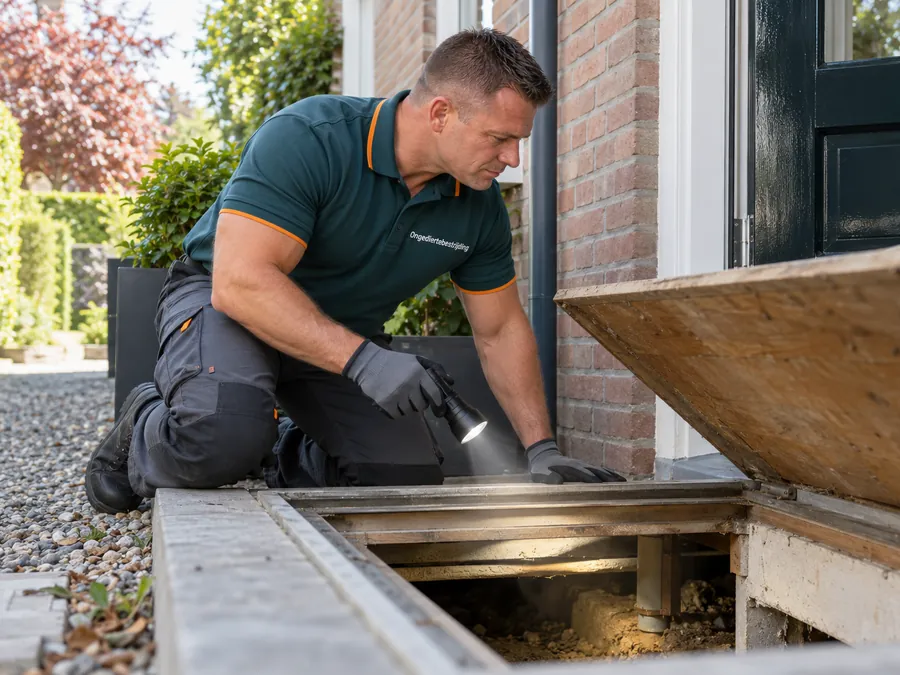
We work according to integrated pest management. The inspection covers the garden, crawl space, shed and the drains around the house. Next we take measures against new entry: sealing holes with mesh or metal, replacing vents and removing food sources. Only then does targeted control follow, with traps or bait in locked stations.
Professional products are reserved for certified pest controllers, and we use them only where truly necessary. Rats are suspicious of new objects, so it can take a while before they approach a station. That is why we come back to check and adjust. Dealing with smaller rodents? Read about mouse control.
What you can do about rats yourself
Take away the food. Feed birds from a hanging feeder rather than on the ground, keep chicken feed and pet food in metal bins and leave no bread or leftovers in the garden. Use a closed compost bin instead of an open heap and keep bin lids shut. Clear clutter, log piles and dense planting against the house so there are fewer hiding places.
Best not to: put out poison where dogs, cats or hedgehogs can reach it, or fill in burrows before the cause is known, because the rats will simply dig again a little further along. Rats are dealt with better through a plan than with odds and ends from the shop, and that plan is what our pest control in Apeldoorn provides.