Mouse control in Apeldoorn: recognising the signs
You rarely see mice, but you do see what they leave behind. They are mostly active at night and keep to walls, the backs of kitchen cupboards and the crawl space. Look out for:
- small dark droppings, about the size of a grain of rice, in cupboards, drawers and along skirting boards
- chewed packets of pasta, biscuits, dog food or birdseed
- rustling and scratching in ceilings, cavity walls or behind a stud wall
- a sharp, musty smell of urine in a closed cupboard or the meter cupboard
- small nests of paper, insulation or fabric in a warm, quiet spot
On the edge of the woods and in the villages it is often the wood mouse, with big eyes, big ears and a long tail. In town the grey-brown house mouse is the usual visitor.
Why acting early pays off
A few mice soon become a sizeable family, as a female can have several litters a year. Meanwhile they gnaw at whatever they come across: electrical cables, pipe insulation, the membrane under the floor. That is more than a nuisance, because chewed wiring can cause a short circuit. Mice also soil food and worktops with urine and droppings, which is the last thing you want in a kitchen.
The longer you wait, the more runs and nesting spots appear and the longer the job takes. An early call in autumn saves you a winter of sharing your home.
Our approach: seal first, then trap
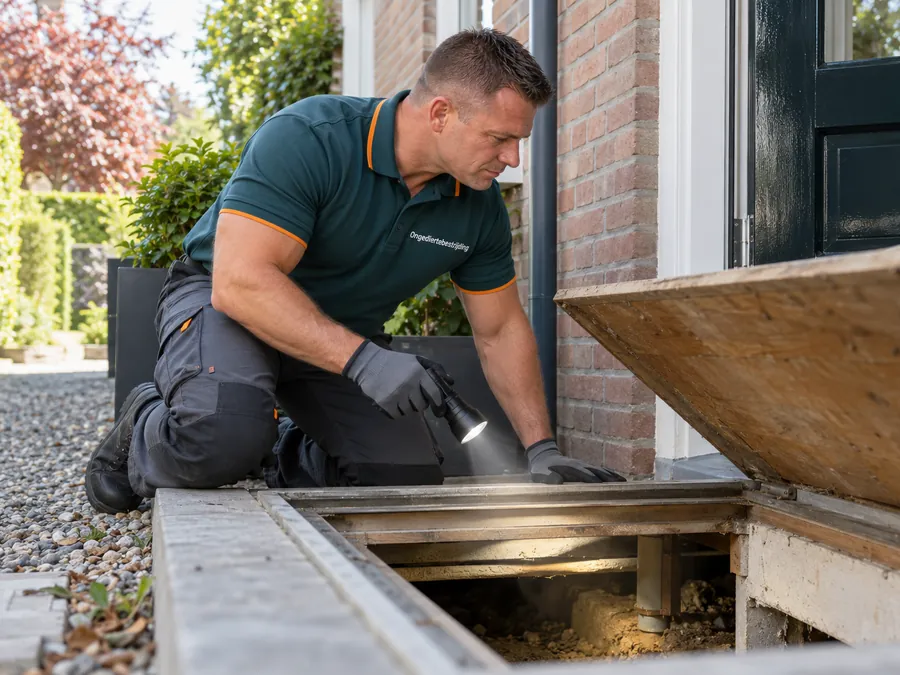
During the inspection we work through the house from bottom to top: crawl space, meter cupboard, pipe entries, air bricks, the joints around window frames and the garage door. A mouse can squeeze through an opening of about 6 mm, so even small gaps matter. We close those weak points with steel wool, fine mesh, metal grilles or gnaw-resistant sealant.
Only then do we place traps or locked bait stations along the runs. Professional rodenticides may only be used by certified pest controllers, and we use them only when genuinely needed. On a follow-up visit we check for remaining activity and remove the traps again.
Doing it yourself – and what to avoid
A couple of snap traps baited with a dab of peanut butter will deal with a single mouse perfectly well. Place them at right angles to the wall, where mice like to run, and check them daily. Store food, birdseed and cat biscuits in glass jars or metal tins and sweep up crumbs under cupboards and appliances.
Best avoided: scattering loose poison pellets in the loft or crawl space. Children and pets can reach them, and a poisoned mouse often dies somewhere inaccessible, which leads to a smell. Ultrasonic devices do not remove the cause either, as the openings remain. If you find bigger droppings or hear heavier movement, see our page on rat control; that calls for a different approach.
Keeping mice out
Mice come indoors for warmth and food, and that starts as soon as autumn nights turn cold. Cut back shrubs and ivy growing against the walls so there is no sheltered route up to the eaves or the air bricks. Keep log piles and compost a few metres from the house and do not park the wheelie bin against the back door.
Every autumn, check the brush strip under the garage door, the crawl space vents and any holes where a new pipe or solar panel cable has been brought in. Small jobs like these often make mouse control unnecessary. If something else is going on, such as a stone marten in the loft, our pest control in Apeldoorn can help.